
The Protein Playbook.
Myths and realities

There are so many myths, so much false misinformation online about protein.
Depending on who you ask, plant protein is "useless," animal protein is "toxic," protein powders are "processed poison," or you need 250 g a day to build muscle to—even more bizarrely—claims from some corners of the internet that protein itself is overrated or largely unnecessary.
Instagram has really forgotten what nuance is, and what common sense is as well sometimes.
So essentially I’m gonna cut straight through it, and build up something grounded in reality.
WHAT IS PROTEIN
Protein is one of the big 3 macronutrients. The RDA(recommended daily amount) sits at around 0.8 grams per kilogram of bodyweight(or around 0.36 gram per pound of bodyweight in FREEDOM UNITS).
However, this is the baseline for maintaining, in sedentary adults. Research does indicate 1.2-1.6 grams of protein per kg of bodyweight, or essentially 0.73 grams per pound of bodyweight for the freedom people.
It’s used to build muscle(and other living tissue), helps bodily reactions(enzymes are proteins), acts as hormones(there are peptide hormones, like insulin), and even provide the scaffolding(matrix) for your bones, in the form of collagen(which your body produces from protein).
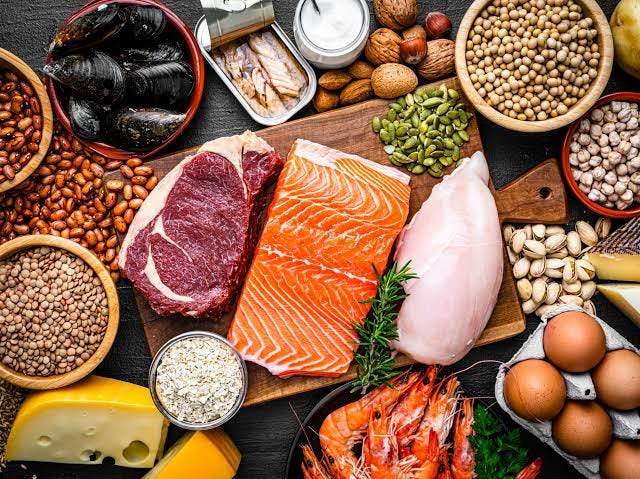
Protein is present in virtually all foods apart from sugar, butter or oils. Nearly every food we eat came from something that was once living, and all living organisms rely on proteins in one form or another, yes including plants.
However, protein is abundant in meat, eggs, fish, dairy(excluding butter), beans, tofu, edamame, seitan and the list goes on.
While almost every food contains some protein, not all proteins are identical. They differ in their amino acid composition and how efficiently our bodies can digest and use them, a concept known as protein quality.
However, how much it matters, isn’t as important as you think.
PROTEIN MYTHS
Plant vs animal protein.
This is probably one of the most discussed topics in the ever-lasting vegan vs carnivore influencers.
Yes, animal proteins are generally better absorbed than plant proteins.
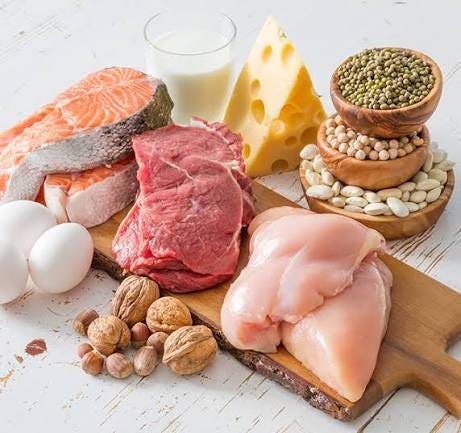
Yes, animal proteins, found in meat, dairy and eggs have ALL essential amino acids(9), in perfectly sufficient amounts.
They are indeed a high-quality source of proteins, and must be treated as such. There is no real nuance to this part.
Plant proteins, on the other hand, especially from unprocessed plant foods, such as beans, legumes, lentils, nuts and grains, have “incomplete protein” as is called online. They contain inadequate amounts of certain amino acids(leucine, methionine etc), not 0, as is commonly stated.
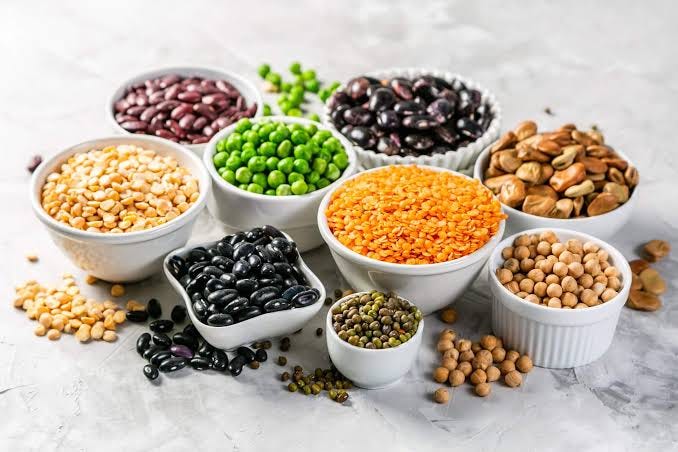
However, this is where the nuance sits. Vegan protein resources have firstly evolved, with soy products(tofu, edamame etc) having all 9 essentials amino acids in sufficient amounts. Next, these unprocessed plant foods must NOT be looked at as only protein sources. Especially nuts, these are FAT sources, mainly. Quinoa, buckwheat and all also do have perfectly adequate amounts.
However, it is also important to note, whey protein(which comes from dairy), does have an advantage of bioavailability IN THE SHORT TERM.
Over a longer term, gains in muscle mass generally tend to be similar.
What matters overall is ADEQUATE protein intake, not over small differences. Get your protein in, people.
If you can’t access animal protein, or soy based protein, for reasons, mixing plant based sources is often the best way, and it doesn’t have to be at every meal.
But the point stands, ADEQUATE protein. My favourites are dairy(cheese, milk, yogurt), and protein powder itself.
You can only absorb 30-40 grams per meal maximum.
This is just a myth that went insanely viral. Even after being debunked, it still holds prominence.
Firstly, absorption doesn’t mean only muscle protein synthesis. Your body uses protein for beyond just building muscle(look above).
When you eat protein, nearly all of it is absorbed, but beyond a certain amount, muscle protein synthesis plateaus. The other remaining protein/amino acids are NOT wasted.
It doesn’t matter, how much protein you eat at one meal, what matters the most is EATING ENOUGH PROTEIN.
Protein timing matters the most
Muscle isn’t built after one meal.
It’s built from months of repeatedly spending more time in positive net protein balance than negative.
Your muscles don’t remember whether yesterday’s protein came at 2:15 or 3:45 pm.
They remember whether you’ve consistently provided enough amino acids over months.
Post-workout timing is a myth that has evolved beyond Instagram fear-mongering. People still think:
“If I don’t drink whey within 30 minutes my workout was wasted.”
That simply isn’t supported.
Resistance exercise sensitises muscle to amino acids for many hours afterward.
Some studies suggest up to 24 hours, although the greatest sensitivity is in the earlier post-exercise period.
If someone ate protein 1–2 hours before training, they already have circulating amino acids during and after exercise.
Overall, though, gang, here’s what matters:
GETTING ENOUGH DAMN PROTEIN IN.
Protein timing. Animal vs. plant protein. The anabolic window. These are all tiny optimisations.
If you’re eating 50 g of protein a day, you have much bigger fish to fry than debating whether you should eat lamb or beans with rice.
Anshrik
https://pubmed.ncbi.nlm.nih.gov/29722584/
https://pubmed.ncbi.nlm.nih.gov/32486007/
that’s exactly how it feels scrolling at midnight. everyone yelling absolutes, nobody remembering that bodies are built from months of consistency, not one perfect meal.
I really loved this. It’s such a great way to educate people and clear up common misconceptions. If you don’t mind, I’d also love to see a similar post about fibre. So many people today focus almost entirely on protein intake but overlook one of the most important parts of a healthy diet: getting enough fibre. I think a myth-busting post on fibre would be just as valuable!